


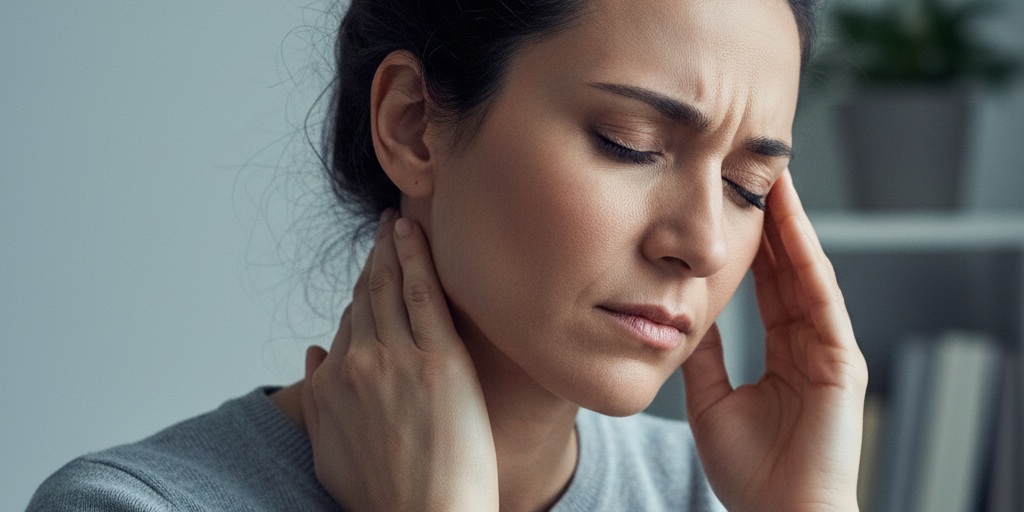
Discover what causes cervicogenic headaches, how C1–C3 cervical segments refer pain to the head and eyes, and how physiotherapy at Bodyreform in Grey Lynn provides lasting relief.
Headaches are among the most common and disruptive physical ailments adults face. While many people attribute recurring head pain to dehydration, fatigue, or general stress, the true underlying driver is frequently biomechanical: the neck.
When head pain originates from musculoskeletal dysfunction in the cervical spine, it is clinically termed a cervicogenic headache.
Understanding how the joints, muscles, and nerves of the upper neck refer pain into the head is the vital first step toward treating the root cause rather than perpetually masking symptoms with over-the-counter painkillers.
What is a Cervicogenic Headache?
A cervicogenic headache is a secondary headache, meaning the pain you perceive in your head is referred from a primary physical problem elsewhere—specifically within the upper three cervical spine segments (C1, C2, and C3).
At the top of your spinal column, the upper cervical nerves converge at a critical neurological junction called the trigeminocervical nucleus. This area acts as a shared relay station where sensory nerve fibres from your upper neck intermingle with sensory fibres from the trigeminal nerve—the primary nerve responsible for sensation in your face, forehead, temples, and eyes.
When the small facet joints, ligaments, discs, or surrounding suboccipital muscles of C1 to C3 become compressed, inflamed, or mechanically overloaded, your central nervous system can misinterpret those distress signals. As a result, the brain projects the pain forward into the head, brow, temple, or behind the eye socket.
What Causes a Cervicogenic Headache?
Cervicogenic headaches can develop gradually through subtle daily biomechanical stress, or suddenly following a specific physical event. Clinical research indicates that the average age of onset typically falls between 33 and 43 years old, although it can affect individuals at any stage of adult life.
Primary contributing factors include:
- Sustained Postures and Reduced Endurance: Long hours spent sitting in forward-head postures at computers, laptops, or mobile devices place continuous tensile stress on the upper cervical spine. When deep stabilizing neck muscles fatigue, the joint segments absorb excess compression.
- Stress and Muscle Tension: Emotional stress often causes subconscious elevation of the shoulders and clenching or tightening of the cervical and suboccipital musculature, compounding joint irritation.
- Physical Trauma: Past motor vehicle accidents (whiplash injuries), falls, sports collisions, or minor cervical fractures and dislocations can create lasting segmental stiffness or ligamentous laxity.
- Injury to Cervical Musculature: Acute strains to the trapezius, levator scapulae, or sternocleidomastoid muscles that alter normal cervical kinematics.
- Underlying Systemic or Joint Conditions: Inflammatory arthropathies such as rheumatoid arthritis, cervical osteoarthritis, or rare underlying systemic pathologies that require careful differential clinical screening.
What Does a Cervicogenic Headache Feel Like?
Because headaches present in multiple forms—including tension-type headaches and migraines—recognizing the distinct clinical presentation of a cervicogenic headache is essential for accurate management.
Common clinical features include:
- Unilateral (One-Sided) Distribution: The headache is predominantly felt on one side of the head, rarely switching sides during an episode.
- Occipital-to-Frontal Radiation: Pain typically initiates at the base of the skull or upper neck and travels forward over the crown toward the temple, forehead, or directly behind the eye.
- Mechanical Provocation: Symptoms are reliably triggered or worsened by specific neck movements, sustained head turns, or remaining in a fixed posture for extended periods.
- Restricted Cervical Mobility: Observable stiffness or a noticeable reduction in your ability to rotate your head comfortably from side to side.
- Localized Upper Neck Tenderness: Palpable tenderness and reproduction of head symptoms when gentle pressure is applied over the C1–C3 facet joints or suboccipital muscle attachments.
It is worth noting that not everyone experiences every symptom, and overlapping features with migraines or tension headaches can occur. A comprehensive clinical examination is vital to determine whether your presentation is purely cervicogenic or a mixed headache type.
How Physiotherapy at Bodyreform Treats Cervicogenic Headaches
At Bodyreform Physiotherapy in Grey Lynn, Sarah, Emma, Zoe, and our clinical team utilize a thorough, evidence-based approach to differentiate headache sources and restore comfortable spinal movement:
- Comprehensive Cervical Assessment: We evaluate upper cervical joint glide, passive segmental mobility, deep neck flexor endurance, and postural mechanics to confirm the precise segmental source of referral.
- Gentle Manual Therapy & Mobilization: Utilizing targeted, low-grade joint mobilizations and soft tissue release to calm irritated facet joints and relax hypertonic suboccipital muscles without aggressive force.
- Motor Control & Deep Stabilizer Retraining: Prescribing specific exercises to reactivate the deep cervical flexors (longus colli and longus capitis), restoring the muscular support system your neck needs to hold your head effortlessly upright.
- Postural Ergonomics & Movement Habits: Identifying practical workplace and lifestyle adjustments to reduce continuous tensile load on your upper neck throughout your workday.
Living with persistent, recurring headaches can be exhausting and limiting. By identifying the mechanical drivers within your upper neck, you can achieve genuine, lasting relief.
Contact Bodyreform Physiotherapy & Clinical Pilates in Grey Lynn
- Location: 1 Schofield Street, Grey Lynn, Auckland 1021
- Phone: 09 361 6415