

Are subtle physical changes impacting your independence? Learn the key warning signs of declining physical health and take 3 simple self-checks to test your balance and lower-body strength.
Healthy Ageing: Keeping Your Strength, Balance, and Independence
Growing older doesn’t automatically mean accepting weakness, stiffness, or a loss of freedom. True healthy ageing is about preserving your physical reserves—maintaining the mobility, power, and confidence required to navigate daily life on your own terms.
Because age-related strength and balance loss often happen gradually, early warning signs can easily be missed. Recognizing these subtle shifts early gives you the power to intervene before small impairments turn into major challenges or falls.
Warning Signs Your Physical Health May Be Changing
Our bodies give us gentle indicators when neuromuscular control or muscle mass begins to dip. Keep an eye out for these subtle signs in your daily routine:
- Balance Changes: Needing to touch furniture while moving through the house, walking with a wider stance to feel stable, or feeling generally unsteady on uneven ground.
- Decreased Mobility & Pace: Walking visibly slower than you used to (for example, taking more than 6–7 seconds to walk a short distance like 15 feet).
- Loss of Lower-Body Power: Relying heavily on your arm strength to push up from a chair, or struggling to get up from the floor.
- Loss of Confidence: Hesitating before stepping out alone, avoiding social outings due to fear of tripping, or experiencing “near falls.”
The Healthy Ageing Benchmark: 3 Simple Self-Checks
How is your body performing right now? Try these three evidence-based physical checks to evaluate your baseline strength and balance:
| Check | What to Try | What the Results Tell Us |
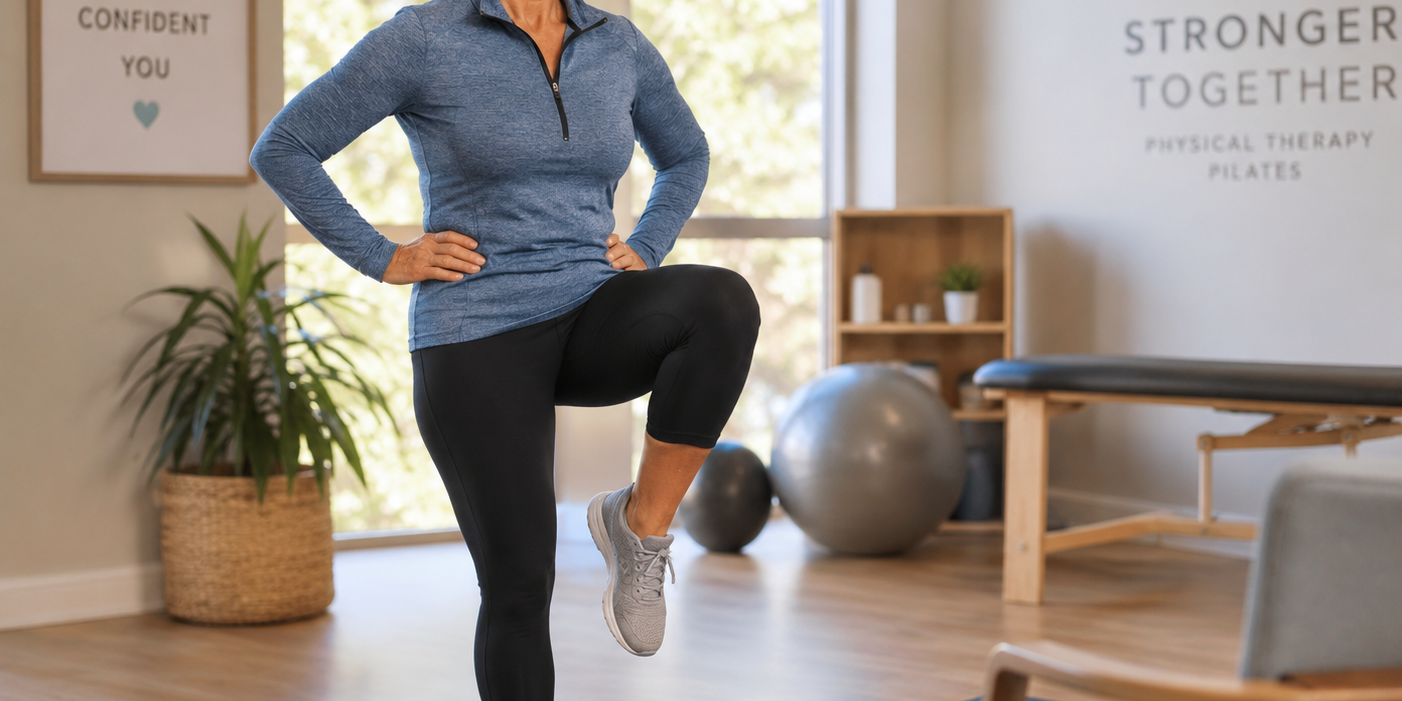
| 1. Single-Leg Stance | Stand near a sturdy counter for safety. Lift one foot and time yourself. | Goal: >10 seconds. Note: Balancing for less than 5 seconds (especially with eyes closed) indicates increased fall risk. |
| 2. 5-Times Sit-to-Stand | Cross your arms over your chest and stand up completely from a standard dining chair 5 times as quickly as comfortably possible. | Goal: Under 15 seconds. Taking longer than 15 seconds signals reduced lower-body power and potential fall risk. |
| 3. 10-Minute Brisk Walk | Walk continuously at a purposeful pace on flat ground. | Goal: 10 minutes without stopping. Needing rest breaks suggests reduced cardiovascular and functional stamina. |
Did you answer “no” or struggle with one of these checks? > Don’t be discouraged. The human body—and nervous system—remains remarkably adaptable at every age. These indicators simply point to areas where targeted training can yield dramatic improvements.
How Clinical Physiotherapy & Pilates Turn Things Around
If your balance or leg strength isn’t where you want it to be, targeted, progressive exercise is the most direct pathway back to confidence.
At Bodyreform, Sarah and our clinical team use tailored assessment tools to pinpoint exactly where your physical chain needs support:
- Targeted Balance Retraining: Restoring reaction time, ankle stability, and vestibular confidence through specific proprioceptive drills.
- Progressive Lower-Body Loading: Building functional leg strength through weight-bearing exercises and specialized Clinical Pilates equipment.
- Gait and Posture Optimization: Refining walking mechanics so you move efficiently and effortlessly.
- Fall Prevention Strategies: Empowering you with safer movement patterns so you can enjoy outings and activities worry-free.
Reclaim Your Confidence and Independence
Small, structured changes today lay the foundation for decades of vibrant living. Whether you want to improve your score on these simple checks or rebuild strength after a period of inactivity, our team is here to coach you safely.
Ready to boost your baseline? Book a comprehensive assessment with Sarah and the Bodyreform team today and take the first step toward moving stronger, safer, and with complete confidence.